

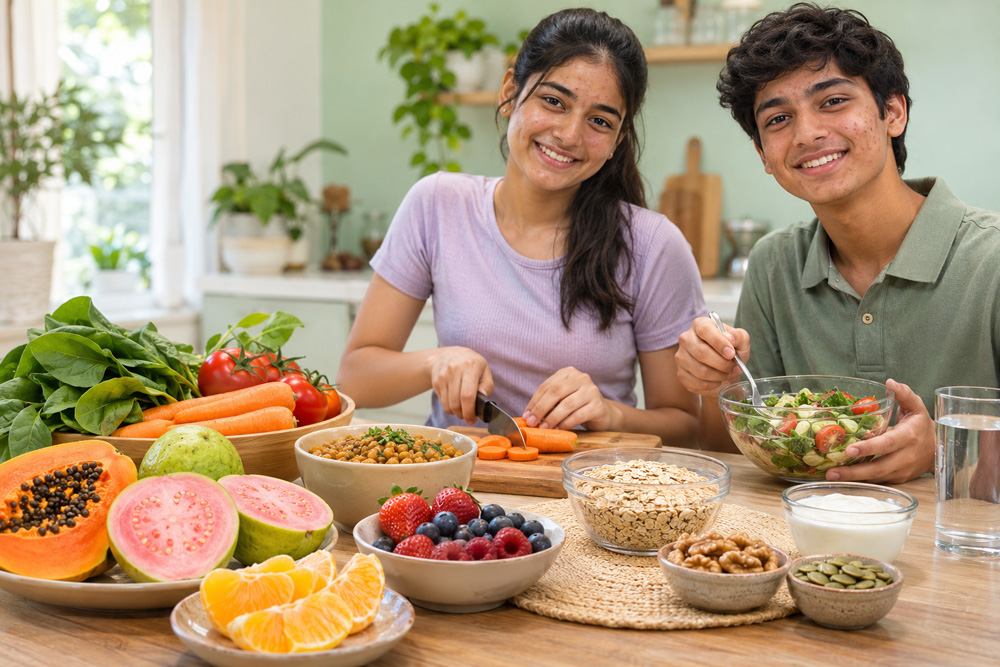
Best Foods for Healthy Skin and Acne Prevention in Teenagers
When teenagers develop pimples, one of the first questions parents ask is:
"Doctor, what should my child eat to reduce acne?"
There is no single "miracle food" that can cure acne. Likewise, there is no need to completely avoid every favourite food. However, a balanced, nutrient-rich diet supports healthy skin, reduces inflammation, and promotes overall growth during adolescence.
The goal isn't to follow a strict acne diet, it's to encourage healthy eating habits that benefit the entire body.
Does Food Really Help Prevent Acne?
Teenage acne is mainly caused by hormonal changes during puberty, which increase oil production in the skin.
However, research suggests that a healthy diet may:
- Support skin healing
- Reduce inflammation
- Improve overall skin health
- Help control acne flare-ups in some teenagers
- Support immunity and healthy growth
Diet works best when combined with:
- Good skincare
- Adequate sleep
- Regular exercise
- Proper hydration
- Medical treatment when needed
Nutrients That Promote Healthy Skin
Healthy skin depends on several important nutrients.
These include:
- Vitamin A
- Vitamin C
- Vitamin E
- Zinc
- Omega-3 fatty acids
- Protein
- Antioxidants
Eating a variety of fresh foods is the best way to obtain these nutrients.
10 Best Foods for Healthy Skin and Acne Prevention
1. Fresh Fruits
Fruits provide vitamins, antioxidants, and fibre that support healthy skin.
Good choices include:
- Oranges
- Apples
- Papaya
- Guava
- Berries
- Pomegranate
- Kiwi
Vitamin C-rich fruits also support collagen production and skin healing.
2. Green Leafy Vegetables
Vegetables contain vitamins, minerals, and antioxidants that help protect the skin.
Include:
- Spinach
- Fenugreek leaves
- Broccoli
- Cabbage
- Lettuce
- Bottle gourd
- Carrots
Aim to include vegetables in both lunch and dinner.
3. Protein-Rich Foods
Protein is essential for skin repair and growth.
Healthy protein sources include:
- Eggs
- Lentils
- Beans
- Chickpeas
- Paneer
- Fish
- Chicken
- Soy products
Teenagers need adequate protein during periods of rapid growth.
4. Whole Grains
Whole grains release energy more slowly than refined carbohydrates.
Good options include:
- Whole wheat
- Oats
- Brown rice
- Millets
- Quinoa
Replacing refined flour with whole grains may support better overall health.
5. Healthy Fats
Healthy fats help maintain the skin barrier.
Choose:
- Walnuts
- Almonds
- Flaxseeds
- Chia seeds
- Peanuts (if there is no allergy)
- Fatty fish such as salmon
Consume these foods in moderation as part of a balanced diet.
6. Yogurt and Fermented Foods
Yogurt contains probiotics that support gut health.
Healthy gut bacteria may contribute to overall health, although research on probiotics and acne is still evolving.
Choose plain, unsweetened yogurt whenever possible.
7. Zinc-Rich Foods
Zinc plays a role in skin healing and immune function.
Foods rich in zinc include:
- Pumpkin seeds
- Lentils
- Chickpeas
- Beans
- Nuts
- Seafood
8. Water
Although water does not cure acne, staying hydrated is essential.
Encourage teenagers to drink water regularly throughout the day, especially after sports or outdoor activities.
Adequate hydration supports healthy skin and overall body functions.
9. Colourful Vegetables
Brightly coloured vegetables contain antioxidants that protect skin cells.
Examples include:
- Tomatoes
- Bell peppers
- Sweet potatoes
- Beetroot
- Pumpkin
A colourful plate usually provides a wider variety of nutrients.
10. Homemade Meals
Freshly prepared home-cooked meals generally contain:
- Less added sugar
- Less unhealthy fat
- Better nutritional balance
Eating homemade meals most of the time supports healthy growth and healthy skin.
Foods That Should Be Limited
Parents do not need to completely ban favourite foods.
However, frequent consumption of the following should be limited:
- Sugary soft drinks
- Energy drinks
- Packaged juices with added sugar
- Chips
- Instant noodles
- Deep-fried snacks
- Burgers
- Pizza
- Cakes
- Pastries
- Excess sweets
These foods may contribute to poor overall nutrition and may worsen acne in some teenagers.
What About Milk?
Many parents ask whether milk causes acne.
Current research suggests:
- Milk does not directly cause acne.
- Some teenagers may notice worsening acne after consuming large amounts of dairy.
- Most adolescents can safely continue drinking milk as part of a balanced diet.
Parents should avoid eliminating dairy products without medical advice.
Healthy Eating Habits That Support Clear Skin
Along with choosing healthy foods, encourage teenagers to:
- Eat breakfast every day
- Avoid skipping meals
- Eat regular home-cooked meals
- Include fruits and vegetables daily
- Carry a healthy snack to school
- Drink enough water
- Avoid frequent fast food
- Maintain regular meal timings
Healthy eating patterns are more important than any single "superfood."
Lifestyle Habits That Matter Too
Healthy skin depends on much more than diet.
Teenagers should also:
- Wash their face with a gentle cleanser 2–3 times daily
- Shower after sports and excessive sweating
- Avoid touching or popping pimples
- Get 8–10 hours of sleep
- Exercise regularly
- Manage stress
- Use skincare products suitable for acne-prone skin
Combining healthy eating with these habits gives the best results.
When Should Parents Consult a Doctor?
Consult a paediatrician if your teenager:
- Has severe or painful acne
- Develops acne scars
- Has acne that persists despite healthy habits
- Has large cysts or nodules
- Has acne that affects confidence or emotional well-being
Parents should also seek advice if they are unsure whether dietary changes are appropriate.
Professional guidance helps ensure your teenager receives the right treatment while maintaining balanced nutrition.
Frequently Asked Questions
Final Thoughts
There is no single food that can prevent or cure teenage acne. However, a diet rich in fruits, vegetables, whole grains, protein, healthy fats, and adequate water supports healthy skin and overall well-being. Rather than focusing on avoiding one particular food, parents should encourage balanced eating habits and a consistent skincare routine.
If your teenager has persistent or severe acne, consult Dr. Himanshu Agarwal, Senior Paediatrician & Child Specialist in Gurgaon, for expert evaluation and personalised guidance. Early treatment can prevent acne scars and improve confidence during adolescence.